Showing posts with label malaysia. Show all posts

Tuesday, November 06, 2012

Now Everyone Can Drive an SUV


(source: Wikipedia)

Tony Fernandes, the founder of budget airline AirAsia and budget hotel Tune Hotel, has teamed up with Renault to produce sport utility vehicles (SUV).

I expect Tony to give us the cheapest SUV in the market. But the base model will be without air-conditioner, music player, power steering, power windows, air bag, cup holders and spare tyre. You may add some or all of these items – at additional charges.

Also, Tony will not appoint resellers for the SUV. You place order online and pick up your vehicle from the warehouse. Alternatively, pay a fee for it to be delivered to your doorstep.

Are you excited?

Wednesday, February 08, 2012

Symphony of Lights – in Malaysia!

People who have visited Hong Kong must be familiar with the show known as Symphony of Lights. The show is played at Victoria Habour at 8 o’clock every evening.

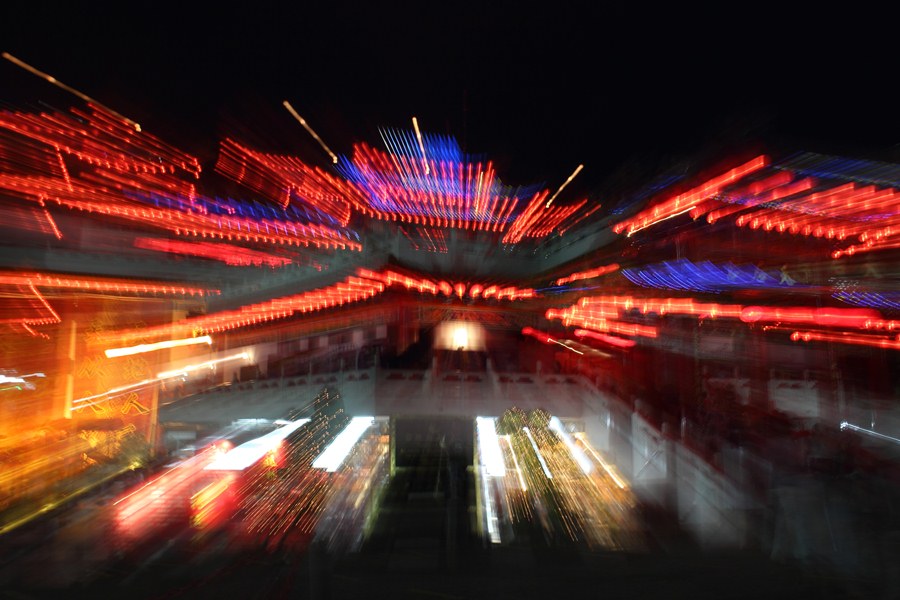
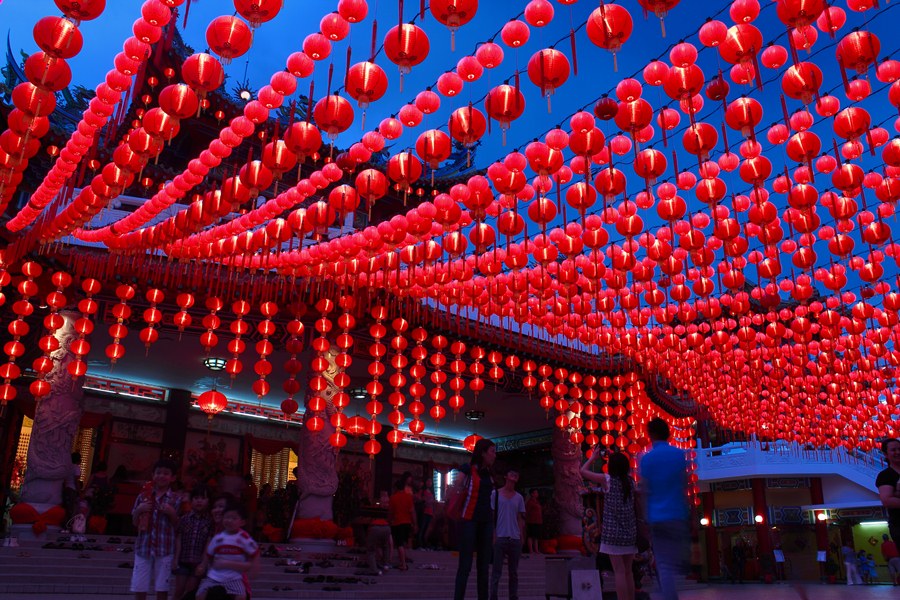
In conjunction with Lunar New Year 2012, Thien Hou Temple in Kuala Lumpur had staged a similar show. Though on a much smaller scale, the show was no less interesting…


The temple…


Playing with zoom…


Here you go, the show of lights…


As in the past years, Thien Hou Temple was decorated with large number of lanterns…


One thing I like about Thien Hou Temple is that devotees are told to burn just 4 joss sticks – one for the Deity of Haven, and one for each of the three in-house deities. Traditionally, Chinese burn 3 joss sticks for every deity. By burning fewer joss sticks, Thien Hou Temple is considerably less smoky. This is good for the health of the people and the environment…


Sunday, February 20, 2011

Thien Hou Temple at Night

Chinese New Year is just over. Thien Hou Temple in Kuala Lumpur, as usual, was decorated with loads of lanterns during the festival. Last year, I visited the temple during the day. This year, I decided to go there at night. Here are a few night shots taken there…


This is an “out-of-focus” shot. I focused at the far-away lanterns. The nearer ones are rendered out-of-focus…


In this shot, I focused on the statue inside the temple hall…


This is yet another out-of-focus shot. Manual focusing was used to achieve such effect…


Wednesday, February 09, 2011

Post-CNY post


Oil lamps in a temple

= = =

OK, I know Chinese New Year is not officially over yet, but I would like to share my thoughts here…

= = =

This year, Chinese New Year fell on Feb 3. I returned to my hometown for the celebration on Feb 1, and returned to Selangor on Feb 7. As Feb 7 was Monday, I expected the traffic to be smooth, but I was wrong. There was gridlock on many stretches of the highway.

On Feb 5 (Saturday), my cousin traveled from Taiping to Kuala Kangsar. The trip took 2 hours, toll-to-toll. On normal days, it should take no more than 20 minutes.

It looks like Malaysian roads are getting more congested every year…

= = =

I have been thinking: what can be done to tackle traffic gridlock during festive seasons?

The obvious way is to widen the North-South Highway. But given its environmental impacts, and the fact that oil price is rising, I would favor shift of focus to public transportation. The good news is that the government is planning to build high speed rail (HSR) linking the major cities on the West coast of Peninsula Malaysia.

Still, we need a car to visit our relatives and friends during festive seasons. So if we take HSR from say, Kuala Lumpur to Penang, we will want to rent a car on the island. Now I hope car rental agencies such as Hertz would seize on this opportunity to provide the service.


Sunday, January 30, 2011

Malaysia’s Dumb Politicians Strike Again

The city of Kuala Lumpur orders that, started from next year, all restaurants in the city must provide Wifi service for their patrons. According to the mayor, this decree is in line with Information Technology vision for the nation’s capital.

That sounds like a great idea. Just imagine, I can walk into a kopitiam (Chinese traditional coffee shop), pull out my Motorola Xoom (a.k.a. iPad killer), and read Facebook updates. But wait a minute, kopitiams in KL have just increased the price of drinks in January, 2011. Will the operators use the Wifi order as another excuse to hike the price again? I can foresee that a cup of coffee will cost RM1.60 next year. In any case, kopitiams are not air-conditioned. When mercury rises to 33C, I doubt I want to spend more than an hour there.

Or, imagine that I am meeting my fellow bloggers for the first time in Dragon & Phoenix Chinese Restaurant. As soon as we are seated, Witch immediately snaps photos with her iPhone 5 and uploads them to Facebook; Panda Foong tweets with his Samsung Galaxy Tab; and Tekkaus tracks the latest English Premier League updates with his Blackberry Playbook. The so-called Bloggers’ meeting turns into Internet session…

There is a common problem among governments of Asia – they think they know what is best for the people and what is best for the businesses. The fact is, not all eateries in KL need Wifi service. Such service incurs additional operational cost, and ultimately it is the consumers who bear it.

CEOs of Celcom, DiGi, Maxis, P1 and YTL are probably feeling uneasy with the Wifi order too. The mobile carriers have invested billions of ringgit in infrastructure, but must now compete with mamak stalls.

If restaurant operators believe that Wifi service will help them attract customers, they will certainly provide it. The governments should keep their hands off businesses. Let the market decide!

Wednesday, January 12, 2011

Kopitiam – a question of Cost & Price

The ‘cartel’ formed by the kopitiams (traditional Chinese style coffee shops) in KL and Selangor has decided to raise the price of drinks starting from January 2011.

A glass of coffee is now priced at RM1.40, up 20 sen from last year. A bowl of noodle is about RM4. So, a simple breakfast at kopitiam costs more than RM5, which isn’t so much cheaper than a breakfast in McDonalds’.

For the record, the breakfast set of ‘2 piece hotcakes’ plus coffee in McDonald’s comes to less than RM5. Better still, in the Golden Arches restaurants, you get cleaner environment, air-conditioning, free coffee refill and free Wifi. You can even pick up a copy of The Sun newspaper in certain outlets.

The kopitiams justify their price hike by citing the increase in material cost. I am sure McDonald’s cannot escape the inflation too, but it somehow manages to keep the price steady. In fact, McDonald’s lowered the price of the breakfast sets in 2010. Also, bear in mind that kopitiams hire lots of low wage migrant workers. Employees in the Golden Arches outlets are predominantly Malaysians.

Two words explain why McDonald’s is able to keep the price low: cost cutting. This is something traditional kopitiams must emulate, if they want to stay competitive in the coming decade. Consumers have choice…

Tuesday, December 21, 2010

台風刮起

我最近常到一家名為『趣台北』的小食館用餐。『趣台北』位於八打零SS2,馬來西亞留台校友會之下。餐館的菜單上有牛肉麵、魯肉飯之類的台灣美食,當然也有著名的珍珠奶茶。

自從亞洲航空飛到台灣後,福爾摩沙似乎已成為大馬華人最夯,最熱門的旅遊地點。在我認識的人之中,就有好幾位今年去過寶島。博客Grass也在不久前偕同家人去寶島觀光。

作為一名攝影發燒友,我參加了好幾回麻豆(model)寫真會。我察覺許多攝影愛好者都模仿台灣的風格。(台灣攝影界本身則受日本影響深遠。)我這一年內也花了幾百塊錢購買台灣出版的攝影書籍和雜誌。(這其中也包括了日本人編寫,台灣人翻譯的書。)

大馬華社曾經受過『日光』、『韓流』的洗禮。現在是『台風』來襲的時候了。

Tuesday, December 14, 2010

KL International Motor Show 2010

Kuala Lumpur International Motor Show 2010 (KLIMS ’10) was held from Dec 3 to Dec 12. For those who had not been able to visit the fair, here are some pictures for sharing…

One of the star attractions of in KLIMS was Chevrolet Camaro. This is the car which appears in the movie Transformers as Bumblebee:


Many car makers showcased ‘green vehicles’ in the show. One was them was Insight, Honda’s entry level hybrid vehicle:


Mitsubishi, on the other hand, presented the kawaii (cute) iMiev:


Even Proton, Malaysia’s car maker, displayed a few green vehicles. Shown below are an electric vehicle and a charging station:


Perodua, another Malaysian car maker, displayed a concept car code-named Bezza. I was more interested in the beautiful model though...


Some gorgeous booth babes in the show:


One of the most intriguing thing on display was Honda’s unicycle – code-named U3-X. It could move on smooth surface without tumbling:

A hot girl demonstrating the use of U3-X. Do you think the photographers at the background were more interested in the gadget or the girl?


Many photographers who visited KLIMS were disappointed, as they were expecting to see sport cars. Instead, they were presented with green vehicles. I wonder if I were the only Malaysian excited by clean tech. It looks like the Earth Hour observed in this country every year has failed to instill environmentalism among Malaysians.

Wednesday, December 08, 2010

Question Marks over a Deadly Accident

Three teenagers aged 17-18, were killed in a road accident in Malaysia on Dec 7, 2010. The tragedy took place on a highway at around 3.30am in the morning.

According to witnesses, the driver, who died on the spot, was trying to make an illegal U-turn in the middle of the highway when their car was struck by another vehicle.


A few things crossed my mind when I read the news:

First, why was the driver making a U-turn on a highway? Didn’t he know it was illegal?

Second, the accident took place at 3.30 in the morning. Why were the three teenagers not at home by then?

Third, the driver was only 17 years old; he only got his driving license one month ago. (Other sources say a few months.) Was he too young to drive without adult supervision? His father defended him, saying that the teenager ‘had never had any accident record’.

According to another source, the young driver once threatened to not sit for exam, when the school wanted him to trim his hair. I suspect he was of rebellious type. If he had been driving recklessly, who was to be blamed?


Read the full story here:

Taking illegal U-turn on highway a costly mistake for three friends

17-years old called home to say they would be late


Friday, November 26, 2010

Loy Krathong in Malaysia

Loy (“to float”) Krathong (“a leaf cup”) – the most charming festival in Thailand – honors both Buddhist traditions and the ancient water spirit of Mae Kong Ka, the Mother Waters of the Ganges River. Loy Krathong perhaps dates back to Hindu India, but the present form was developed by the Thais at Sukhothai to honor the rains which had watered the earth and to wash away the sins of the previous year.

Loy Krathong begins with a full-day parade of beauty queens, floral floats, and hundreds of participants dressed in historical costumes. As the sun falls, pilgrims launch thousands of tiny banana-leaf boats, each carrying a single candle, onto the rivers and lakes throughout the kingdom – a wonderful, delicate illusion enhanced by the light of the full moon.

(Carl Parkes, Thailand Handbook)


I didn’t go to Thailand, but a Thai temple in Malaysia, Wat Chetawan, celebrated this festival on Nov 20, 2010. Out of curiosity, I went there for a look. As I had sent my DSLR to Canon for service, all my pictures were taken with Panasonic Lumix…

Friday, October 22, 2010

Malaysian model vs. American model

On Oct 20, Malaysian Prime Minister Najib Razak announced that Malacca had achieved the status of “developed state”. This means that, even though Malaysia as a whole was still a developing country, some states were already highly developed. Another state, Selangor, achieved this “status” several years ago. (By the way, Oct 20, 2010 is written in this country as 20-10-2010.)

Upon reading the news on the Web, I couldn’t help but wondered when Perak, where I grew up, would be a developed state too. My guess is not within the next 10 years. Selangor is the wealthiest state in Malaysia, while Perak is one of the poorest.

The disparity between Selangor and Perak underlies one fundamental flaw in the government structure. In Malaysia, most taxes go to the Federal Government, which then distributes the money to individual states. Sadly, the Federal Government has been practicing “favoritism” for the last few decades. Some states get more funding, while other are neglected.

By contrast, state, county and city governments in the United States have the power to collect taxes. For example, every working people pays two types of income tax – one to the Federal Government and the other to the state government. Sales tax also goes to the states. (Oregon has zero sales tax!) Hotel tax, I believe, is determined by the cities. When I was in California some years back, I moved from one hotel to another. Some cities set the hotel tax at 10%, while others had it at 15%.

The local governments will then use the money collected to fund their projects rather than waiting for handout from Washington. Of course, there are times when the states will still need Federal money. To its credit, Washington does not practice favoritism to the same level as Putrajaya. President Obama, a democrat, has been generously enough to support states run by republicans.

I would like to see state governments of Malaysia be empowered. But I am not optimistic this will happen…

Thursday, October 14, 2010

华教地位岌岌可危

马来西亚星洲日报在10月10日刊登一则新闻,题目是《华教地位岌岌可危》。

星洲日报是在访问马华公会青年团教育主任张圣闻后刊出这则新闻。张氏认为『华教发展江河日下,未来的路只会越来越难走』。

然而,中文教育在大马真的是『岌岌可危』吗?这到底是事实还是迷思?

马来西亚独立初期,许多华人家长把子女送入英文学校就读。后来政府取消英文学校,华文学校就成了华裔家长的首选。而受英文教育的人长大后,也为自己不懂中文感到遗憾,纷纷把儿女送入华校。按理说,中文教育在本国应该是进入了黄金期。别的不谈,马华创党人敦陈帧禄与早期的领袖,大多受英文教育。但自从王家定接任会长以来,该党似乎已由讲华语的一群支配。

还有另一个事实,能说明中文教育的现况。问问身边的华裔中学生:华、巫、英三种语文,那一个是他们最有信心(most comfortable)的。这里所说的信心是指读、写、听、讲的能力,不是指SPM考优等;大家都知道中学五年纪的华文科特别难考。我很肯定大部分的华裔生都会回答说他们的中文最好。

学生中文水准下滑倒是有可能。但那或许是教育制度出问题,或课文欠妥,绝对不关华教地位,也并非华人不重视『母语』。(有学者认为华人的母语其实是方言,甚至也包括了英文和Baba式马来语。)记得我唸中学时,华文课有一半时间是学文言文。后来学校采用新课本,文言文的比例大幅降低。其实华校生唸完小学时,一般已能掌握白话文,中学应当强调文言文和诗词曲才对。

不过话又说回来:我们学中文的目的何在?『华教斗士』会毫不犹豫的告诉我们:『随着中国崛起,中文已经愈来愈重要。』如果我们是以经济利益为出发点,就无须理会文言文;中三程度已绰绰有余。马华又何必搞什么(中五生)『选考华文运动』?

欲提升中文水平,必须对症下药。一味危言耸听,只会给学生、家长和教师施加不必要的压力,牺牲学子掌握其他语文的能力,甚至也加速华族方言的灭亡。

Monday, October 11, 2010

Chopsticks and Spoon

筷子和羹匙

一位出差到吉隆坡的台湾工程师最近问我:马来西亚华人究竟有无用筷子。

我回答说:吃饭一般用羹匙,但吃面还是用筷子。

我个人是比较喜欢用筷子吃饭。当然,如果我在外面用餐,餐馆没提供筷子,我还是会用羹匙。

岂有此理,居然还有人骂我是香蕉人!


A Taiwanese engineer who was in Kuala Lumpur recently asked me, “Do Chinese Malaysians use chopsticks?”

I replied, “Majority use spoon and fork for eating rice, but we still use chopsticks for noodle.”

I am among the minority who prefer chopsticks to spoon, even when eating rice. Nonetheless, when I eat out, if the restaurant does not provide chopsticks, I would still resort to spoon.

Heck, people still condemn me as a banana man!

Tuesday, September 28, 2010

Greater ‘Greater KL’? No thanks!

The Government of Malaysia has just announced the Economic Transformation Program, or ETP. The ETP identifies twelve National Key Economic Areas (NKEA), one of which is Greater Kuala Lumpur.

The vision for Greater KL is to turn the nation’s capital into one of the global top-20 most livable cities, as well as having a top-20 ranking in city economic growth by 2020. The GNI (Gross National Income) share of Greater KL will be increased from approximately 30 percent of the nation’s GNI to approximately 40 percent. Total employment in this region will also increase from 2.5 million this year to 4.2 million by 2020. Total population will increase to 10 million, up from the current 6.4 million.

That is, the population of this region will increase by more than 50% within a decade!

Isn’t KL crowded enough? Don’t we complain about getting stuck in traffic gridlock everyday? Isn’t the property price already prohibitively high? I can imagine that a person who works in KL proper will have to live in Tanjung Malim, simply because he/she cannot afford a house anywhere nearer to the workplace. And the government is talking about ‘livability’!??

On the other hand, Perak, Pahang, Terengganu and Kelantan will be littered with ghost towns, as these states continue to lose their people to Greater KL.

There are people who think that a ‘mega city’ is essential to stimulate the economy. A property analyst, for example, is reported to say, “Cities generally generate a huge proportion of a country’s wealth. Paris produces 30% of France’s wealth, Tokyo 20% to 25% of Japan’s, and the Klang Valley 30%.” (Making Greater KL the nation’s heartbeat, The Star, September 25, 2010)

But why don’t we look at American model instead? In the US, New York is the financial capital, while Los Angeles in the entertainment capital; Silicon Valley hosts the headquarters of Intel, Apple and Google, while Detroit is the home for auto industry; of course, Washington DC is the national capital. Economic activities do not revolve around any single mega city, but rather distributed across the nation.

OK, maybe America is too big compared to Malaysia. But even the state of California has four major centers instead of just one. These centers are – from North to South – San Francisco (Bay Area), San Jose (Silicon Valley), Los Angeles and San Diego. The state capital is the little-known Sacramento.

In Malaysia, the Federal Government decides where the money and people should go. American cities, on the other hand, compete with each other for investment, funding and talents. Which is why any city can thrive – subject to factors beyond their control such as geographic location and climate.

I am not in favor of the Greater KL plan. The government should instead shift focus to less-developed regions of the country.

Tuesday, September 07, 2010

Discrimination, Intolerance & Hope - USA vs. Malaysia

I came across an interesting article by Ziad Haider, a Muslim American, in a Malaysian newspaper recently. He wrote in response to the controversy surrounding the construction of an Islamic cultural center in New York City.

Background:

Imam Feisal Abdul Rauf, a Muslim clergy who lived in America, wanted to build an Islamic cultural center in New York City. The proposed site was two blocks away from the former World Trade Center. His plan was met with strong objection among Americans, who mistook, or misrepresented, the cultural center as a mosque. They argued that the construction of a mosque so near to the ‘Ground Zero’ would hurt the feeling of the people whose relatives were killed in September 11 terrorist attacks, or that it would mark the victory of extremism.


Here is an excerpt from Ziad Haider’s article:

Catholics were thought to bear ultimate allegiance to the pope – not to America. The election of the first Catholic President John F. Kennedy ended that. During World War II while the US was at war with Japan, Japanese Americans were placed in internment camps – a wrong that has been publicly acknowledged. Now it seems is the turn of Muslim Americans whose allegedly exclusive allegiance to syariah over the constitution is in question at a time when Islamic extremism is the threat.

History seems to show that this too shall pass. Despite a host of hate crimes that have occurred ranging from the recent stabbing of a Bangladeshi taxi driver because he was a Muslim to the desecration of several mosques in the US, the voices of Muslims and non-Muslims supporting the center and condemning such heinous attacks are spilling over across the airwaves, online, and in the streets of New York. The maelstrom will exact a toll in the days ahead but America will, I believe, ultimately self-correct…

(Ziad Haider, America’s Islamic center, The Sun, September 2, 2010)


As a Muslim American, one would expect Haider to be upset over the controversy. Yet, rather than lamenting intolerance in his country, he expressed hope. He believe America would self-correct. He believed in a better future.

Malaysia, like the US, is no stranger to racial and religious conflicts. Our history isn’t as bad as America’s. Unfortunately, we are also more pessimistic. In fact, it is arguable that racial relations have gone downhill since the day Union Jack was lowered some 53 years ago. How could that happen?

In his article, Ziad went on to write:

…For better or worse America is engaged in a debate; it is long overdue elsewhere as well.


I believe debate, or lack of it, is exactly what has held us back…


Monday, July 26, 2010

Say No to Man U?

Malaysia is a soccer-mad nation. Manchester United is probably the most popular European football club in this country. However, recently the Islamic authorities have warned that Muslims should not don the jersey of the Red Devils, as its emblem features a devil.

Note: Haram is the Islamic term for ‘unlawful’.

Further, the Islamic authorities have also told the Muslims to not wear the jersey of Barcelona FC, whose logo contains a cross.

Further, Muslims are also told to shun the jersey of Liverpool FC. The main sponsor of the football club is Carlsberg, the bear-maker.


Now, consider this: Malaysia’s national flag has a symbol of Islam – new moon. Should Malaysian Christians to salute it?

Monday, July 19, 2010

Bukit Tinggi

Bukit Tinggi is a hill resort located slightly further away from the more famous Genting Highlands. (That is, if we drive from Kuala Lumpur.) Run by Berjaya Group, it is also known as Berjaya Hills. I have known of Bukit Tinggi for many years, but it was only recently that I set foot on it…

At 3,500 feet above sea level, Bukit Tinggi is not as high as Genting Highlands or Cameron Highlands. On the plus side, it is less developed, and less crowded…


I shot this picture with CPL filter. It really made a difference…


…


…


Inside Japanese Garden…


The Japanese Village of Bukit Tinggi is a bit disappointing. But the purpose I went there was to photograph model in traditional Japanese costumes. Stay tuned for the pictures of the beautiful model…


Tuesday, July 13, 2010

Luxury Prison

(Click to enlarge)

This picture was taken in the township of Bukit Rimau. This is a big house with big piece of land. The owner must be very wealthy.

Unfortunately, the barbed wire makes it look like a prison…

I shot this picture from across the street. At first I wanted to shoot from close distance. But then I told myself, “No way. If the people inside the house notice that I am taking photo here, they would call the police.” These people are paranoid!


豪华监狱

以上这张照片是在Bukit Rimau拍的。照片中是一所大豪宅,屋主肯定很富有。

可惜的是,围住房子的铁丝网使它看起来像所监狱。。。

我在路的对面拍摄这张照片。我原本想近距离拍,但随即想到:『不行,如果屋里的人知道我在拍照,肯定会通知警察。』这些人怕抢劫和绑架怕到发狂了!


Wednesday, June 16, 2010

Kota Kinabalu, and my Return Flight


This is a road in Kota Kinabalu. It’s called Jalan Dua Puluh 3.

But why is it written as Jalan Dua Puluh 3, and not Jalan Dua Puluh Tiga or Jalan 23? (For the uninitiated, Dua Puluh means twenty three in Malay.)

There is another road in the city – a larger one – called Jalan Dua Puluh. Not sure if the two roads were related in one way or another. However, I didn’t see Jalan Dua Puluh 1 or Jalan Dua Puluh 2.

Maybe someone familiar with the city could explain to us the origin of the road…

= = = = = = = =

When I flew back from Kota Kinabalu to Kuala Lumpur on May 23, 2010, AirAsia’s computer system was down for several hours. Check-in process was done manually, and I waited one hour before I was served. The counter could not issue computer-generated boarding pass. Instead, I was given a hand-written boarding pass, as shown in the picture.

As you might expect, the flight was delayed. The plane left the terminal at 7.20pm, being 50 minutes late.

The plane finally took off. I was hungry, and wanted to have my dinner. Since AirAsia was a budget airline, meal was not complimentary, but had to be bought separately. Disappointingly, the cabin crew announced that the plane was running out of food. All they had were cup noodle and chocolate bars, and drinks. Not interested in the ‘snacks’, I decided to starve until I reach destination. But the stewardess was still trying to persuade me to spend my hard-earn money. “Aren’t you hungry?” she asked. WTF.

The flight was definitely not a pleasant one, but I had no complaint. At least I reached home safely…


Sunday, June 06, 2010

Cameron Highlands revisited

I visited Cameron Highlands recently. Here are a few photos for sharing…

Tea plantation:


Café overlooking the tea plantation:


Rose:


Chrysanthemum:


I didn’t know rosemary was a kind of plant:


This was my fourth visit to Cameron since Dec 2004. My third visit was in February 2008. I noticed that a lot more buildings had been constructed since then.

Cameron Highlands can be very crowded during long holidays. The greedy local council, wanting to attract more tourists and generate more taxes, had approved construction of many hotels. (And there was probably corruption involved.) Unrestrained development had taken a toll on the fragile environment. Malaysians and Singaporeans flock to Cameron Highlands to escape the heat on the lowland, but I could feel mercury rising up there too.

Cameron Highlands is the victim of its own success…